Leadwap

Educative And Informative Blog

Breaking

Saturday, 30 May 2020

May 30, 2020

Government Abolishes Almagiri System In Kano State

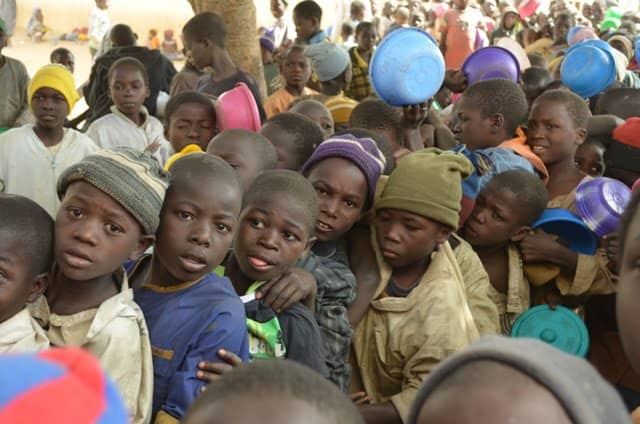
- Almajiris have become a threat to the society especially in northern part of Nigeria, where they are now used to cause havoc or with dangerous and harmful attitudes.
kANO
 - Governors in the north have since recognised this fact and have been phasing out the moribund system of education gradually.

Almajiri System of Education is one of the oldest traditions in the northern region. However, due to its negative impact on the development of the region the governors have agreed to abolish the system.
Kano state govt abolishes almajiri system

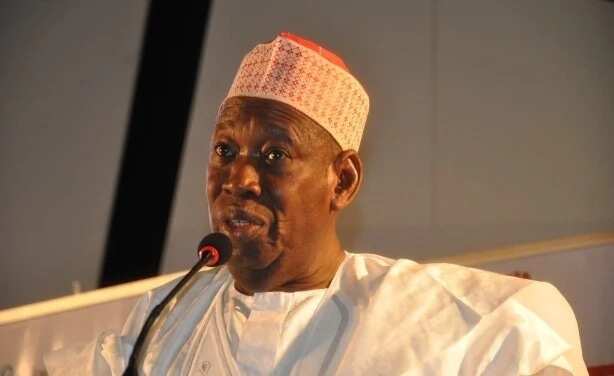
 Dr Abdullahi Ganduje, the governor of Kano State, on Wednesday, May 27, announced the abolishment of traditional almajiri system of education in the state. Governor Ganduje said henceforth, all almajiri repatriated to Kano from other states will be enrolled into the conventional education system. Ganduje declared as a matter of policy “every child in Kano state, including almajiri must go to school.” Governor Ganduje declared that every child in the state must go to school. 
The governor said his government has concluded plans to incorporate the repatriated almajiri into the state free, compulsory primary and basic education policy. The almajiri education system was established under the Kanem-Borno Empire, one of the oldest ruling empires in the world extending from the frontiers of Northern Nigeria across the Chadian region up to the borders of Libya. It was established as an organized and comprehensive system of education for learning Islamic principles, values, jurisprudence and ultimately the recitation and memorization of the Qur’an which became basic Islamic learning centers in all Muslim communities.
 At that time, the system was funded by the state treasury and the state Zakat funds and was under the control of the Emirs of the traditional government system that existed before the coming of the British. However, over the years, the system has been bastardized and outlived its usefulness. Almajiris have become a menace in the country especially in northern Nigeria, where they are now used to cause havoc in the society. Governors in the north have since recognised this fact and have been phasing out the moribund system of education gradually.

Meanwhile, UNICEF on Tuesday, May 5 warned that internally displaced children – including in Nigeria - are among the world’s most vulnerable to the COVID-19 pandemic. The warning came as the organization released a report looking at the risks and challenges facing internally displaced children, and the urgent actions needed to protect them.

Monday, 22 October 2018

October 22, 2018

BUK Planning To Set UP Community Television Soon

BUK To Set Up Community Television Soon… VC

Image result for buk


As part of the grand design to expand the programmes in the Faculty of Communication, plans are underway for the establishment of a community television broadcasting, the Vice Chancellor, Professor Muhammad Yahuza Bello, has announced.
Speaking at the opening of the 4th Annual Conference of the Association of Communication Scholars and Professionals of Nigeria (ACSPN) at Green Desert Hotel Kano, on Wednesday, 6th September, 2017, the Vice Chancellor said already the University had approached the regulatory body, the National Broadcasting Commission (NBC) for the processing of the issuance of television broadcasting license.
“We have approached the NBC for a community television broadcasting license. In the same vein, we have ordered complete digital broadcasting equipment for our radio station to replace the existing analogue station. Equally, our brand new 150 computer unit laboratory for online journalism classes will be operational before the end of the year, all these aim at improving teaching and learning in the communication field. Indeed, the management is determined to ensure that the Faculty of Communication is visibly on the radar of global communication education,” the Vice Chancellor said.
According to him, the management would do everything possible to ensure that communication programmes attract the best staff and students; acquire the latest gadgets and offer high quality, relevant and dynamic training reflective of the emerging trends in the discipline globally.
“Our Communication Faculty is our selling point in and out of Nigeria and we shall make it the best, if it is not already the best, at least, in Nigeria. Our goal is toproduce ethically minded journalists of excellence, for, we fully know the implications of poorly trained journalists on national development,” he also stated.
The Vice Chancellor, while acknowledging the commitment and efforts of the Dean and his team, which led to securing a grant of over N200 million, said there is the need to diversify in the process of learning, teaching and research which were the primary mandates of a university.
Earlier in a welcome address, the Dean of the Faculty of Communication, Professor Umaru A. Pate, commended the effort of the management of Bayero University for a special consideration afforded the Faculty which led to its transformation from a department to a full-fledged Faculty of Communication, which stood to be the first of its kind in this part of the world.
He also acknowledged the immense contribution of the Governor of Kano State, Dr. Abdullahi Umar Ganduje as well as other numerous guests including the UNESCO Communication Training and Curriculum Development Programme Specialist, Professor Facson Banda, describing the occasion as unique and dear to the University.

Wednesday, 17 October 2018

October 17, 2018

Kano Celebrates Its First Private University


Kano Celebrates Its First Private University

The National Universities Commission (NUC) on Tuesday presented provisional licence to Skyline University, Kano, to begin operation.But also under probation of an older generation university for coaching and Gaurdiance for a range of 3 years

The Executive Secretary of the commission, Abubakar Rasheed, presented the licence to the proprietor of the university, Kamal Puri, an Indian businessman and educationist.
It becomes the first private university in Kano, arguably Nigeria’s most populous state, and the second private university in the North-west region of the country. The region has seven states.
The first private university in Nigeria was licensed in 1999. Which was the Al-Qalam University in Katsina State, the first private university in the region, was established in 2005.

According to Mr Rasheed, Skyline University will become the 75th private university in the country.

“There are 42 federal universities in Nigeria, 47 are state-owned while 75 are privately owned. In total, there are 164 universities in Nigeria. For many, the numbers are too large but for those who are in the system, the numbers are few,” he said.

Mr Rasheed urged the proprietor of the new university to adhere strictly to the technical advice which includes the rules and regulations of the commission.

The Executive Secretary also appealed to government at all levels and philanthropists to institute scholarships for indigent students to enable them access quality education.

“There is nothing we can do as a commission to regulate the fees of private institutions. We have 198 million people in Nigeria and it is difficult to say how many universities we need in the country because some of the universities are small,” he said.

He said the 75 private university in Nigeria account for only 5.31 percent of the total enrolment in universities while noting the need either to establish more universities or expand existing ones.

“If you look at the population of 198 million which is close to 200 million, and bear in mind the total enrolment in our universities today, all the 164 universities’ enrolment is slightly less than two million.

“It is 1.961 million students in the universities, which translates to roughly one percent of the population. One per cent of the population are in the university and I think it’s not healthy,” he said.

Speaking at the event, Minister of Education, Adamu Adamu, said the emergence of private universities in Nigeria has created an environment for healthy competition that stimulates improvement in quality service delivery in the system.

Mr Adamu, who was represented by his ministry’s permanent secretary, Sunny Echono, said substantive licence will be issued to the new university if it is adjudged as being well-managed after three years of probation.

“During the probationary period, the Skyline University will be attached to an older generation university, the Bayero University Kano, for academic and administrative mentoring to be moderated by NUC,” he said.

Meanwhile, the proprietor of the university, Mr Puri, said technology is advancing, therefore the world needs to prepare the future generation for the task. He also made known that the institution will bring the best curriculum and technology to Nigerians.

“Skyline is a 28-year operating university in United Arab Emirates, which has run British education, which has run American education, Asian and Middle East in Africa. We have experience of complete global education system,” Mr Puri said.

Also speaking, the deputy governor of Kano State, Hafiz Abubakar, said the state needs a minimum of 10 universities to be able cater for at least 60 per cent of qualified candidates seeking university admission. Mr Abubakar said Kano state has 6,300 primary schools and 7,844 public secondary schools.

“Kano as you know is the most populous state in the country. We have in the basic level of education an enrolment of over N3.804 million in primary, junior and senior secondary schools”, he said.

Sunday, 15 July 2018

July 15, 2018

HND Certificate Rendered Useless By New Laws been Imposed On Polytechnic By FG


H.N.D Certificate is No Longer Valid in Nigeria

The Federal Executive Council, (FEC) on Wednesday concluded the approval of the decision of a comprehensive reform of Nigeria’s tertiary education system.

Presently the award of HND will be limited to only those students who are currently admitted or in process for the programmes.

Under the new rule, the polytechnics will now become campuses of the situated institution is with the Vice Chancellors of those universities appointing provosts for the polytechnics, subject to the ratification of the Universities Councils.

The polytechnics will now be limited to award of the National Diploma (ND) while those desirous of further education will be awarded the Bachelor of Technology (B. Tech) by the Institution

To begin the new policy, the nation’s two most important polytechnics – Yaba College of Technology and Kaduna Polytechnic – will henceforth be known as City University of Technology, Yaba and City University of Technology, Kaduna.

And to give legal proceedings to these approvals, the (FEC) Federal Executive Council approved the submission of two Executive bills to the National Assembly for enactment.

With education being on the concurrent list, the states may wish to consolidate their tertiary institutions. But if they do not wish to follow the federal example, their programmes will continue to be regulated by the relevant agencies of the Federal Ministry of Education.

The first bill will concretise the setting up of the two city universities while the second will approve the preparation and consolidation of all federal polytechnics and colleges of education as campuses of proximate universities.

The Ministry of Justice will do the preparation and submission of the two bills to the National Assembly.
Also, all the programmes currently being run by polytechnics, which are not technology based, and which are about 70 per cent theoretical, will be removed from the syllabus.
Minister of Education, Adamu Adamu, told journalists after the weekly meeting of the council that under the reform measures, his ministry would, however, continue to license private polytechnics and colleges of education for the award of qualification at ND and National Certificate in Education (NCE) levels.

He said, “There will be no more award of HND.

“After we have exhausted the current students under the programme, there will be no more award of HND. This means that there will be no fresh admission for HND programmes. And in addition, any programme that is not technical will be out of the polytechnics.

“About 70 per cent of polytechnic graduates are in the non-technical courses. It is going to be a rigorous implementation programme.”

A ministerial committee to ensure the smooth implementation of all that is required for the take-off of the reform initiatives is to begin work immediately.

Adamu said, “The HND certificate will remain a legal tender in Nigeria and holders of such certificate will continue to be recognised as the equivalent of first degree holders without discriminatory remunerations and limit to progression in the work place.

“The NCE certificate will be retained as the minimum teaching qualification at the basic level of education. Any higher qualifications by these private or state-owned polytechnics will be only affiliation with a university. So, HND is no longer in existence, but existing HND will be respected and considered legal tender.” 
This sounds as a great improvement for tertiary institutions in our country Nigeria.
Keep up the good work!!!.

Thursday, 12 July 2018

July 12, 2018

A Kid Of 15 years Emerged Outstanding In His O'Levels and Jamb


Okorogheye Orisheneye David a 15 year old boy’s Emerged Outstanding in his performance in WAEC and JAMB and this had caught the intention of so many people and made them impressed that his story has made it to the internet and social medias.
 He was said to have gotten straight A's in all the nine courses he registered for in the 2018 (WAEC) West African Examination Council. He also cleared his JAMB exam emerging with a total score of 332.

Tuesday, 29 May 2018

May 29, 2018

Best Emerging Student In LASU University Who was Very Poor In WAEC And NECO

Student Who Failed WAEC/ NECO Whole fully Emerges Best Graduating Student In LASU 


  One of the best emerging student graduating from the Lagos State University LASU in the 2016/ 2017 academic session, Mr. Ogunsanya Adetoro has confirmed and said that he failed his first WAEC/ NECO due to health issues he was facing at that period.

The young man was 24-year-old who graduated with a Cumulative Grade Point Aggregate CGPA of 4.7 from the department of Business Administration explained he inherited an eye disease named Contaract from his father.

He said the health problem he had had a negative impact on his academics in secondary school, as the eye disease increasingly spread, contaminating his both eyes which really affected his studies. According to this young man, he said
My Parents helped me to seek medical help but the first operation I had was not successful.

“When my first WAEC and NECO came out, it was dotted with F9s, so I left home and went to stay with my uncle and his wife.

“My uncle and his wife also helped me to seek medical treatment at the University College Hospital (UCH), Ibadan and the operation was successful,” he said.

Adetoro, said he went back to school to retake his WAEC and JAMB after he was treated, after sitting at home for three years.

“I was able to make four A’s and three B’s and scored 215 in JAMB to gain admission to LASU, Adetoro recalled.

According to him, he had applied for Accounting at LASU but opted for business administration because Accounting was not accredited at the time.

Adetoro noted that his academic journey was rigorous and herculean, even as he lost his father in 2015.

“But my doggedness and tenacity yielded a good result, he added.

“We have internalized the new LASU mantra and will represent the institution in the outside world positively by being good ambassadors and providing solutions to societal problems,” said Adeotoro.

Adetoro lauded Gov. Akinwunmi Ambode for his investment and commitment to LASU.

The VC, also urged the students to be good ambassadors of the school and give back to their alma mater.

Fagbohun said the university graduated 29,710 students for the session, out of which 26 students made First Class division.

He said 21,481 students graduated with first degrees, 201 with diplomas, 7,982 in the Post-graduate cadre and 46 PhDs"

For Everyone out there this information is also an educative means to let you know that 
"The downfall of a mann is not the end of that man"
 

Tuesday, 1 May 2018

May 01, 2018

FG Deposited N138b To Improve Educational Sector In Nigeria

Image result for nigeria map

Educational Sector Receives N138b In Nigeria

The Federal Government of Nigeria deposited the sum of N138 billion in the last three years to empower educational system in the Nigeria. The Minister of Education Mallam Adamu Adamu,, said this during the launch of the (NPA) National Personnel Audit  of basic educational institutions in Abuja on Monday. The (NAN) News Agency of Nigeria  reports that the audit will cover all pupils, students and personnel in both public and private sector of basic educational institutions in Nigeria.  Mallam Adamu said the funds, managed by the (UBEC) Universal Basic Education Commission, were accessed by states and the Federal Capital Territory that also paid their counterpart contributions. He explained that the personnel audit was in line with the provisions of the Universal Basic Education Act 2004, “to help establish reliable education data for planning. ” It is very important to note that since its establishment in 1999, the commission has successfully conducted two national personnel audit in the country in 2006 and 2010 respectively focused only on public schools.” The minister said the audit would also establish strong foundation for sound management information system in the basic educational sector. He added it would empower the current (NEMIS)  National Educational Management Information System which serves as a key pillar of the nations educational planning process. Earlier, the Executive Secretary,Dr Hamid Bobboyi Universal Basic Education Commission (UBEC) said lack of data was a major setback in the education sector. He however said that the audit would help to create a comprehensive and reliable basic educational data bank in Nigeria. He noted that the exercise had no connection with auditing financial accounts of schools. Dr Hamid Bobboyi listed some specific objectives of the personnel audit to include obtaining reliable data of children of school going age enrolled in basic education schools. Other objectives include obtaining the number and qualification of teaching and non-teaching staff including their personal information and progression in service. He said the exercise would also provide authentic school mapping of all basic education schools in the country as well as address the challenges of inadequate education data. The Minister of FCT, Mallam Muhammad Bello assured that the FCT administration would support the commission to ensure smooth conduct of the exercise. Similarly, Mr Halilu Ahmed of the  (NASRDA) National Space Research and Development Agency, described the exercise as a quantum leap because of the use of digital technology where information on basic education could be accessed with a click of the button. He said that the database was designed to be updated on regular basis  in such a way  to accommodate newly established schools or new infrastructure. Also, Dr Mahmud Abubakar, Chairman, Governing Board of UBEC, said the role of NASRDA was important to the effective conduct of the exercise. He said that at the end of the exercise, a virile and responsive (GIS) Geographic Information System  would be developed to help in planning, monitoring and evaluation of the sub sector. Mr Abdulahi Salifu, Regional Director, UNESCO, congratulated UBEC for taking the lead, saying that the audit would help ascertain the quality and quantity of teaching and non teaching staff. He added that it would also give more information on what needed to be done and improved upon in the system, and identify the number of out children in Nigeria who are not in school or not able to attend school because of some reasons. 


Sunday, 22 April 2018

April 22, 2018

Prof. Akindele Accused Of Sexual Crime


Sexual Crime !!!

The Obafemi Awolowo University (OAU) has suspended Professor Richard Akindele over the  recorded audio conversation in which sex was demanded from a female student.

According to a media statement signed by the Vice Chancellor, Professor Eyitope Ogunbodede, a prima facie case has been established against him.

“Having regard to the gravity of the offence for which Professor Richard I. Akindele is found to be prima facie liable, the Vice-Chancellor, in line with the Code of Conduct for the University Community and acting under all the laws and regulations of the University enabling him in that regard, has directed that Professor Richard I. Akindele be suspended forthwith from the University, pending the final determination of the disciplinary case against him.”

The statement reads:

“Audio Conversation: Obafemi Awolowo University Suspends Professor Richard I. Akindele

The Vice-Chancellor of Obafemi Awolowo University, Ile-Ife, has received and considered the interim report of the Committee set up to investigate the allegation of sexual harassment revealed in a recent audio recording.

In the interim report submitted to the Vice Chancellor, Professor Eyitope Ogunbodede, Professor Richard I. Akindele, of the Department of Management and Accounting, is now established to be the lecturer in the controversial “marks for sex” audio recording. The female voice has also been identified as that of Miss Monica Osetobe OSAGIE, a Postgraduate Student on the Master of Business Administration Regular programme.

Although the Investigative Committee had invited both Professor Richard I. Akindele and Miss Osagie, only Professor Akindele had appeared before the Committee, while Miss Osagie is yet to appear or make any representation. The report indicated that many other witnesses appeared before the Committee and gave useful evidence. The University is making efforts to ensure that Miss Osagie appears before the investigative committee so that it can hear her side of the case and promptly submit its final report.

The Committee observed that a prima facie case of inappropriate relationship with the female student had been established against Professor Richard I. Akindele. The Vice-Chancellor, having carefully and dispassionately considered the report, also came to the conclusion that a prima facie case of serious misconduct had been established.

Having regard to the gravity of the offence for which Professor Richard I. Akindele is found to be prima facie liable, the Vice-Chancellor, in line with the Code of Conduct for the University Community and acting under all the laws and regulations of the University enabling him in that regard, has directed that Professor Richard I. Akindele be suspended forthwith from the University, pending the final determination of the disciplinary case against him.

Under the supervision of the relevant Statute of the University, an academic staff can only be dismissed from service or have his or her appointment terminated only when the matter on which consideration is being given has been investigated by a Joint Council and Senate Committee, and the staff has appeared before the committee with his or her counsel, if so desired. This procedure is the minimum requirement of the law and regulations of the University. It should therefore be noted that the suspension of Professor Richard I. Akindele is on the basis of the findings of the Investigative Committee that he is prima facie liable, and this decision will abide, pending the final determination of the case by the Council of the University.

We will like to ensure that the university will continue to do everything legally and morally upright in pursuance of its avowed commitment to zero tolerance for sexual harassment or any form of it.

Monday, 2 April 2018

April 02, 2018

Waec speaks on 2018 ban policy on private school teachers


Recently, The West African Examinations Council (WAEC) has insisted that the law of ban enforced on private school teachers from supervising the West African Senior School Certificate Examination (WASSCE) should be made effective.

They was reacting to threat by Christian schools under the aegis of the Association of Christian Schools in Nigeria (ACSN) to withdraw from its examinations.

WAEC Head of Public Affairs, Demianus Ojijeogu, said the council banned all private school teachers in the country, irrespective of their religion.

“We have recently uncovered that the said supervisors from private schools do aid exams malpractice because they have nothing to lose”, he told Thisday.

“They have no pension or gratuity from their employers, so most of them mainly look for money during national examinations.

“Any WAEC supervisor caught involving in malpractice will be punished, irrespective of the school the person in question is from”, he added.

On the 2018 WASSCE, Ojijeogu assured that the council had put in place the machinery that will ensure successful conduct.

“The safety of our staff and other ad-hoc personnel and the prevention of examination malpractices is important.
The officials also came out to say that

“There will be continuous monitoring of examination centres throughout the period; we are also working on a timely release of the results"